

The Rockhurst University Counseling Center offers mental health counseling and support services to Rockhurst students for a variety of issues that can impact academic and personal success.
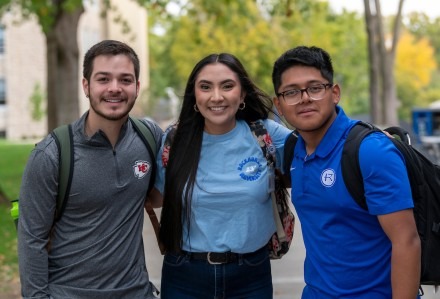

Counseling services are confidential and free, including individual therapy for personal concerns, psychoeducational support groups and therapy groups, referrals for psychological testing, wellness programming and outreach, and consultation. In-person and teletherapy appointments are available.
Rockhurst Students Eligible
for Counseling Services
Students who are enrolled in a degree-seeking program are eligible to receive care at the Counseling Center. All degree-seeking students, online or in person, can use BetterMynd teletherapy services for mental health support.
Image
Counseling Center Questions
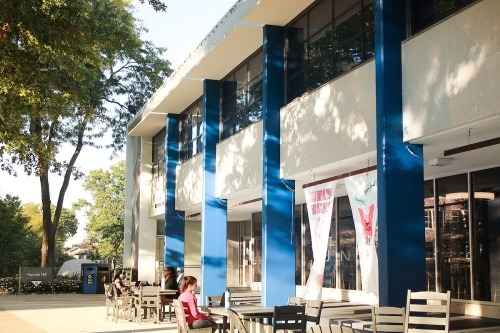
The Rockhurst University Counseling Center is located in Massman Hall, lower level (3), Room 005.
How do I schedule an appointment?
- Rockhurst Portal
- When selecting an appointment, students who have never been seen at the Counseling Center should choose an Intake appointment slot. Current/recent clients may choose a Counseling appointment slot.
- Call 816-501-4275
- Visit the receptionist in Massman 3 (lower level)
When is the Counseling Center open?
The center is open Monday – Friday from 8 a.m. to 4:30 p.m. During Fall and Spring semesters, some evening appointments are available. Please call for these hours.
If a mental health emergency occurs between 8 a.m. and 4:30 p.m., Monday through Friday, contact the Counseling Center office at 816-501-4275. A psychologist/counselor will see you as soon as possible. If a counselor is not available in a timely manner, you may be referred to BetterMynd for immediate support. If arriving in person, please inform the receptionist and you will be seen by a counselor as soon as possible.
How long are appointments?
First appointments are usually scheduled for one hour, while additional appointments last 50 minutes. For the first appointment, please arrive 10 minutes early to complete the intake forms.
Is the information I share during counseling sessions always kept confidential?
All information discussed within counseling sessions is kept confidential. Even if your RA or a professor walks you to our offices, they cannot know whether you attended any additional sessions or what you discussed without your written consent. The exceptions to this rule are if you are in imminent danger of hurting yourself or others, and/or disclose any type of abuse regarding a minor child or a vulnerable adult (elderly or disabled person). In these situations, we are legally required to report information to the appropriate agencies or intervene as necessary. Only Counseling Center staff can access your counseling file. It is completely separate from your academic record, and no one may have access to any part of it without your specific written consent.
What We Do
Individual Counseling
Counselors are available to meet individually with students seeking help. Students can talk confidentially about anything that is on their minds. Students seek counseling for a wide variety of concerns, but some common issues are: stress, anxiety, grief, family issues, low mood, relationship difficulties, trouble adjusting, identity concerns, loneliness, body image/eating concerns, past or recent trauma, self-harm/suicidality, and academic difficulties.
Clients typically attend 2–10 sessions, depending on their individual needs and goals. Sessions are usually scheduled biweekly and last 50 minutes.
Image

Telehealth Services
In addition to in-person sessions, we do offer telehealth services to Rockhurst University students. Here are several tips to make your teletherapy experience as close to in-person therapy as possible, whether through the Rockhurst Counseling Center or BetterMynd.
Note: Due to licensing laws, students must be physically located in Missouri or Kansas at the time of their appointment.
Access to BetterMynd
BetterMynd offers free, confidential mental health support for students—anytime, anywhere. Students can self-schedule free 50-minute teletherapy counseling sessions, access a 24/7 support line, and join unlimited live wellness workshops designed specifically for college life. Whether you're feeling overwhelmed, stressed, or just need someone to talk to, BetterMynd is here to help.
Image

Consultation
Faculty, staff, students, and parents concerned about a student can consult our counseling staff.
Outreach
We provide programs and presentations to classes, organizations, teams, and other groups. We also collaborate with departments to promote mental health and wellness initiatives on campus.
Referral Assistance
When appropriate, our staff helps identify community mental health resources for students whose needs fall outside our scope of services. Our Scope of Services Policy is available on request.
Workshops and Groups
We offer topic-based groups and workshops, where students can learn alongside and receive support from their peers. Such topics may include test anxiety, coping skills, mindfulness, stress management, and the like.
Mental Health Resources
More Counseling Center FAQs
Why should I go to counseling? Does it work?
Yes. We all experience stress at times. Sometimes it helps to have someone else validate your experience. Sometimes we are looking to better deal with a personal crisis, a major loss, a family conflict, a relationship breakup, sexual issues or any personally troubling matter. Research during the past 20 years confirms that psychotherapy is effective for a wide range of personal and relationship problems.
I've never been to counseling before. What is it like?
Personal counseling is a healthy, normal process of interacting with a trained professional in a safe, confidential setting to resolve or better understand a challenging situation in one's life. Often, a person may feel confused, anxious, or overwhelmed, yet can experience considerable relief in a few short sessions by discussing private concerns with a professional.
Who are the professional staff members?
The clinical service staff consists of full-time licensed psychologists and one graduate student intern.
Besides counseling, what other services are available?
The staff is trained and ready to provide speakers and workshops on a variety of mental health and interpersonal relations topics. Sometimes staff or faculty groups are stressed or in conflict and seek our team-building assistance or other organizational consultation. Sometimes entire classes want us to provide a program, like managing test anxiety.
If a friend (or student) of mine is having problems, how can I get them to come see you?
While we cannot make anyone seek counseling, directly expressing your concern to your friend, along with the center's phone number, (816) 501-4275, is often enough to get them here. If not, you may want to call to discuss this question.
Staff and faculty may refer students to the Center by calling 816-501-4275, or call for consultation about a student they are concerned about.
Our Mission
To provide professional counseling services to Rockhurst students and to support the mental health of the campus community through collaboration, outreach, and consultation services.
Contact Information
Rachel Pierce, Ph.D., Director
rachel.pierce@rockhurst.edu
Sydney Redding, LCSW, Asst. Director
sydney.redding@rockhurst.edu
Monday – Friday 8:00 am – 4:30 pm
Please call for evening hours during Fall and Spring semesters.
Additional Resources
Rockhurst University:
- RU Security (24-hour): (816) 501-4010
- Campus Ministry: campusministry@rockhurst.edu (816) 501-4303
- Residence Life: Contact your Resident Assistant (RA), Resident Director (RD) or your Area Coordinator
- Student Accessibility Services: (Mon-Fri 8 AM-4:30 PM) sas@rockhurst.edu
Kansas City:
- Research Psychiatric Center Crisis Line (24-hour): (816) 235-8162
- Center for Behavioral Medicine (24-hour): (816) 404-3800
- Midwest Center for Eating Disorders at Research Medical Center (24-hour): (816) 276-3880
- MOCSA Sexual Assault (24-hour): (816) 531-0233
- Johnson County Mental Health Center (24-hour): (913) 268-0156
- Shawnee Mission Medical Center, ER (24-hour): (913) 676-2218
- Swope Health Services Crisis Line (24-hour): (888) 279-8188
- Saint Luke's Convenient Care Troost: 5151 Troost, (816) 502-9130
- Goppert Trinity Family Care: 6675 Holmes Road, Suite 360, (816) 276-7600
National Resources:
- National suicide prevention lifeline (24-hour): 988 (call, text or chat)
- Crisis text line (24-hour): Text HOME to 741741
Rockhurst Parents:
- Helpful resources, links, and information for parents of Rockhurst University students.
Our Student Success team provides services and assistance with every step of your academic journey.


